Choosing a dust-free cable carrier for cleanroom motion systems
Key takeaways
A Moving Cable System for Clean Rooms should match the machine’s travel, bend radius, cable load, and cleaning procedures. For semiconductor handling and medical device assembly, acceptance should depend on particle measurements under representative motion conditions. A "dust-free" label does not establish zero particle generation.
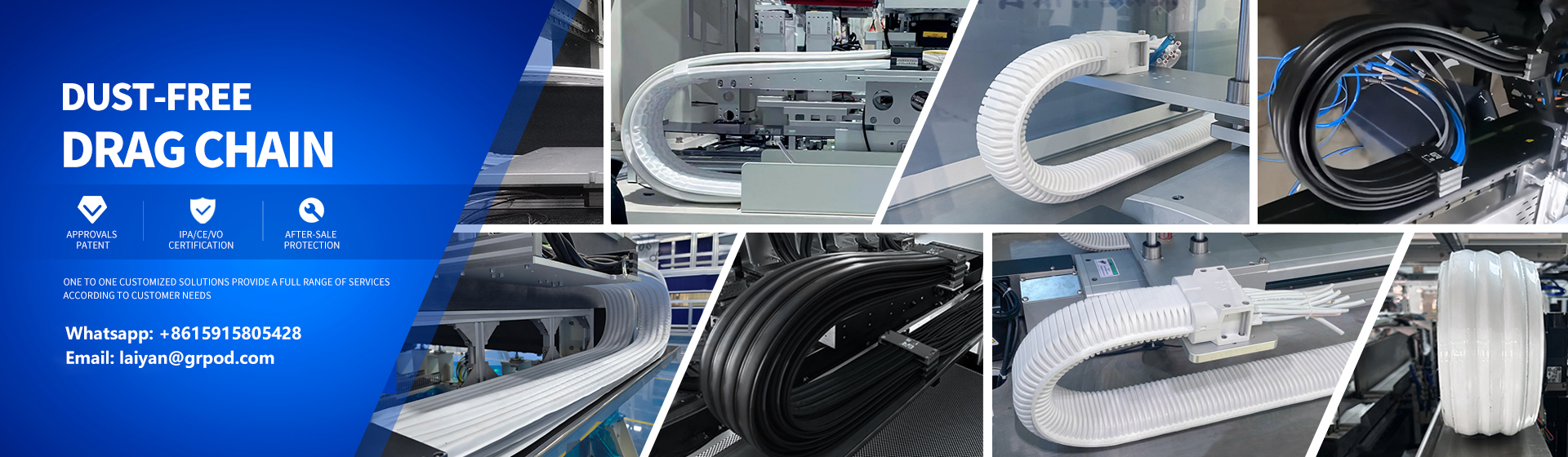
Evaluate Guangrou dust-free drag chains and Guangrou flat cables as a complete assembly. Compare Guangrou open-type dust-free drag chains with Guangrou closed-type dust-free drag chains for cable access, enclosure integrity, and measured particle release. Guangrou Class 100 dust-free tank chains require reports identifying the classification standard and test conditions.
Huizhou Zhongke Intelligent Technology Co., Ltd. reports core PTFE membrane modification technology and an integrated process covering membrane development, production, and drag-chain assembly. These capabilities merit review for material traceability and process control. Claims that its PTFE membrane offers better wear resistance than most competing materials require comparable abrasion-test evidence.
Request endurance and noise results at the intended speed, acceleration, and load. Check particle counts after extended cycling, since initial cleanliness and quiet operation do not establish long term cleanroom compatibility.
Cleanroom cable fit
A Moving Cable System for Clean Rooms should match the machine’s travel, bend radius, cable load, and cleaning procedures. In semiconductor handling and medical device assembly, a cleanroom drag chain must limit friction and keep moving cables away from exposed products.
For a guangrou drag chain, compare Guangrou dust-free drag chains and Guangrou flat cables against the installation requirements.
| Product option | Fit check |
|---|---|
| Guangrou open-type dust-free drag chains | Check whether the opening supports cable access without compromising particle control. |
| Guangrou closed-type dust-free drag chains | Check enclosure integrity and cleaning access. |
| Guangrou Class 100 dust-free tank chains | Request evidence supporting compatibility with the intended cleanroom conditions. |
Huizhou Zhongke Intelligent Technology Co., Ltd. reports PTFE membrane modification capabilities and an integrated process covering membrane development, production, and drag-chain assembly. These capabilities warrant review when selecting a drag chain manufacturer. Claims that its PTFE membrane resists wear better than competing materials need comparable test results.
Ask the drag chain factory for particle-test conditions and material traceability. A “dust-free” label alone does not establish suitability.
The cable carrier solution should then undergo particle, motion-life, and noise assessment under representative operating conditions.
Particle test data
when selecting a Moving Cable System for Clean Rooms, request particle-count reports for the complete moving assembly. Reports should specify particle-size thresholds, background counts, sampling position, motion speed, bend radius, cable loading, and test duration. Semiconductor processing and medical device assembly can have different contamination limits, so a cleanroom classification alone does not establish suitability.
For Guangrou dust-free cable carriers and Guangrou flat cables, check whether testing covers the proposed cable arrangement. Guangrou open-type dust-free cable carriers and closed-type dust-free cable carriers need configuration-specific evidence because their construction can affect particle release. Guangrou Class 100 cleanroom cable carriers should also have reports identifying the classification standard and test conditions.
Huizhou Zhongke Intelligent Technology Co., Ltd. describes its capabilities as PTFE membrane modification, membrane development and production, and cable-carrier assembly. These integrated processes support material and assembly control. However, claims that its PTFE membrane resists wear better than competing materials require comparable abrasion-test results. Request particle measurements after extended cycling as well as initial operation; wear resistance alone does not establish low airborne particle generation. Treat "dust-free" as a qualified performance claim, not an assurance of zero particles under every operating condition.
Motion life tests
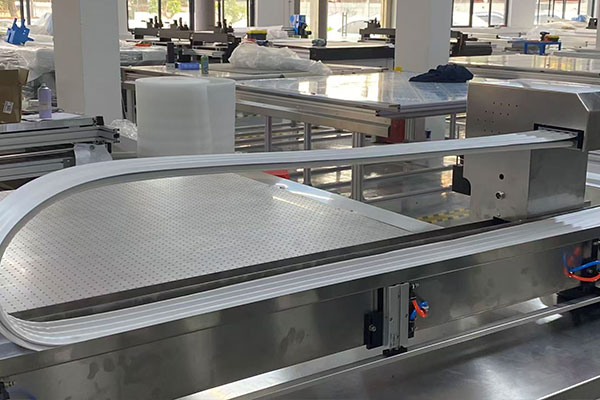
A Moving Cable System for Clean Rooms should undergo endurance testing under conditions that match the intended machine. Specify the bend radius, travel length, acceleration, cable load, and mounting orientation. A cycle count alone cannot establish service life in semiconductor equipment or medical device assembly.
For Guangrou dust-free cable carriers and Guangrou flat cables, request particle measurements before, during, and after cycling. Inspect the PTFE film, seams, and cable surfaces for abrasion, cracking, or deformation. Evaluate open-type dust-free cable carriers and closed-type dust-free cable carriers separately because their construction affects cable restraint and inspection access. For Class 100 cleanroom cable carriers, verify the classification basis and test conditions rather than relying on the product designation.
When assessing Huizhou Zhongke Intelligent Technology Co., Ltd., request documentation of its PTFE film modification technology and its production process covering film development, manufacturing, and carrier assembly. Any claim of better wear resistance than competing materials needs comparable test evidence. Record operating noise throughout endurance testing, since wear or loosened components can change acoustic performance before visible damage appears.
Low noise selection
when choosing a Moving Cable System for Clean Rooms, compare noise measurements under matching speeds, accelerations, cable loads, and microphone distances. Check background noise and mounting conditions, too. A quiet test at low speed may not represent semiconductor handling or medical device assembly. Repeated clicking or rubbing warrants inspection for cable contact, poor alignment, or an unsuitable bend radius.
Evaluate Guangrou dust-free cable carriers and Guangrou flat cables as an assembled system. Cable restraint, support surfaces, and routing affect vibration and sound. Compare Guangrou open-type dust-free cable carriers with Guangrou closed-type dust-free cable carriers under the intended motion profile. For Guangrou Class 100 cleanroom cable carriers, verify the stated classification against documented particle testing; the product designation alone does not establish suitability.
For Huizhou Zhongke Intelligent Technology Co., Ltd., request documentation supporting its stated PTFE membrane modification technology and integrated membrane development, production, and carrier assembly processes. Any claim that its membrane resists wear better than most competing materials needs comparable abrasion-test evidence. Review noise alongside particle counts and wear after endurance testing. Low sound levels alone do not verify dust-free performance.
Conclusion
selecting a Moving Cable System for Clean Rooms requires evidence that matches the machine’s operating conditions. Review particle counts, motion-life results, and noise measurements at the intended bend radius, speed, and cable load. For semiconductor handling and medical device assembly, confirm compatibility with cleaning procedures and contamination limits before approving the installation.
Assess Guangrou dust-free drag chains and Guangrou flat cables as a complete moving assembly. Choose between Guangrou open-type dust-free drag chains and Guangrou closed-type dust-free drag chains according to cable access, enclosure requirements, and measured particle release. Guangrou Class 100 dust-free tank chains also require documentation identifying the classification standard and test conditions.
Huizhou Zhongke Intelligent Technology Co., Ltd. reports core PTFE membrane modification technology and an integrated process covering membrane development, production, and drag-chain assembly. These capabilities merit consideration for material traceability and process control. Any claim of better membrane wear resistance than most competing materials should be supported by comparable abrasion tests. Base final acceptance on representative assembly testing, including particle measurements after extended cycling.
FAQs
What should I check when selecting a Moving Cable System for Clean Rooms?
Match travel, bend radius, cable load, and cleaning requirements. In semiconductor handling and medical device assembly, test particle release under representative motion conditions.
Does "dust-free" mean that a carrier generates no particles?
No. For Guangrou dust-free drag chains, request particle reports stating particle sizes, background counts, sampling positions, and operating conditions.
How do open-type and closed-type carriers differ?
Guangrou open-type dust-free drag chains provide cable access, while Guangrou closed-type dust-free drag chains enclose the cables. Verify cleaning access and particle performance for each configuration.
Does a Class 100 designation establish suitability?
Guangrou Class 100 dust-free tank chains need supporting reports identifying the classification standard and test conditions. The designation alone does not establish machine compatibility.
Should cables undergo endurance and noise testing with the carrier?
Yes. Test Guangrou flat cables within the assembled carrier. Check particle counts, wear, and noise throughout cycling at the intended speed and load.
What PTFE capabilities does the manufacturer report?
Huizhou Zhongke Intelligent Technology Co., Ltd. reports core PTFE membrane modification technology and integrated membrane development, production, and carrier assembly. Claims of better wear resistance than most competing materials require comparable abrasion-test evidence.
Contact Guangrou for a clean room drag chain solution.