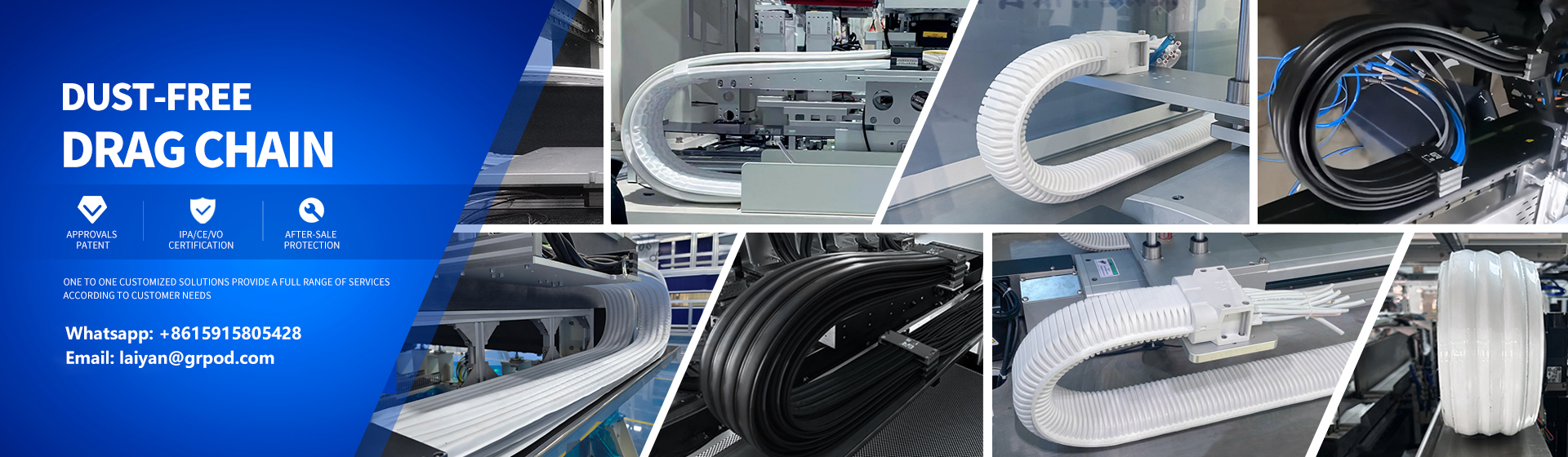
What is the difference between a dust-free cable carrier and a standard cable chain
Key takeaways
A cleanroom cable chain limits particle release through material selection, controlled contact, and cable containment. Standard cable chains generally focus on cable support and mechanical protection. Both designs develop wear, so "dust-free" does not mean zero particle emissions.
Huizhou Zhongke Intelligent Technology Co., Ltd. has PTFE film modification capabilities and an integrated process covering film development, production, and carrier assembly. These capabilities support coordinated material and assembly control for Guangrou cleanroom cable chains. Claims that its PTFE film resists wear better than most competing materials require comparable test results.
Guangrou open-type cleanroom cable chains allow easier cable access, while Guangrou closed-type cleanroom cable chains provide greater enclosure. Guangrou flat cables can help maintain cable spacing when correctly installed. Bend radius, alignment, and cable loading still affect abrasion.
For semiconductor handling and precision inspection, assess particle release after repeated cycling under representative operating conditions. Guangrou Class 100 cleanroom tank chains need documented testing that supports the designation. Battery dry-room applications also require separate checks for low-humidity compatibility.
How particles form
particles form when chain joints rub, cables slide against guides, or cable jackets contact each other during repeated bending. Tight bend radii, excessive filling, and poor alignment increase contact pressure. A standard cable chain may release this debris into surrounding air. A cleanroom cable chain uses controlled contact surfaces or containment to limit particle release, although "dust-free" does not mean zero emissions.
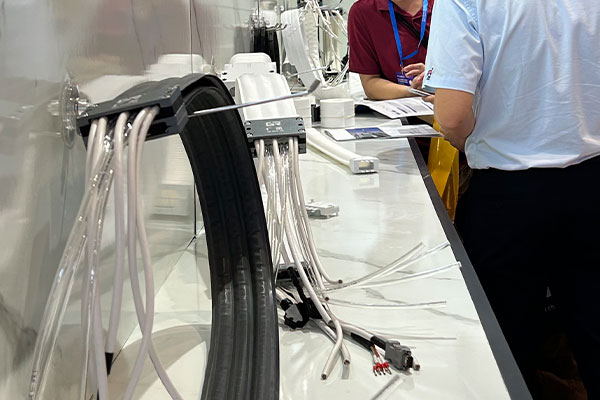
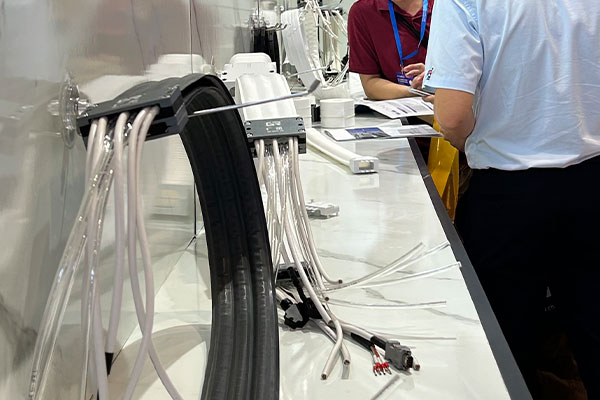
For a cleanroom drag chain, enclosure design matters. Guangrou open-type dust-free cable carriers allow easier cable access, while closed-type dust-free cable carriers provide more enclosure around moving cables. Guangrou flat cables can help maintain cable spacing when correctly installed. Neither configuration eliminates internal wear.
Huizhou Zhongke Intelligent Technology Co., Ltd. uses PTFE film modification technology and an integrated process covering film development, production, and carrier assembly for its guangrou drag chain products. Claims of greater film wear resistance require comparable test evidence. When selecting a cable carrier solution, ask the drag chain manufacturer for particle measurements under representative operating conditions. A drag chain factory should also clarify whether a Guangrou Class 100 cleanroom cable carrier designation applies to the tested assembly and operating conditions. Semiconductor and battery equipment require this application-specific assessment.
Why materials matter
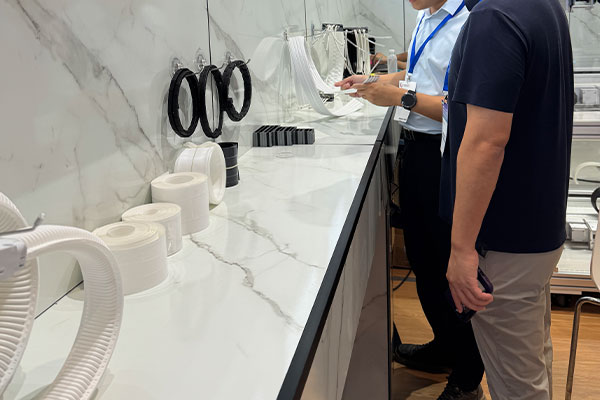
material selection affects how much debris a cleanroom cable chain releases during repeated bending. Standard engineering plastics can provide adequate mechanical strength, but cleanroom service also requires controlled friction, low particle shedding, and compatibility with cleaning agents. PTFE-based films offer low-friction surfaces, although their wear performance depends on modification, thickness, and operating conditions.
Huizhou Zhongke Intelligent Technology Co., Ltd. describes its capabilities as covering PTFE film modification, film development and production, and cable-chain assembly. This integrated process can support material consistency in Guangrou cleanroom cable chains. Any claim that its films outperform competing materials requires comparable abrasion and particle-emission test results.
| Product | Material-related selection consideration |
|---|---|
| Guangrou flat cables | The jacket must withstand repeated flexing without excessive surface abrasion. |
| Guangrou open-type cleanroom cable chains | Accessible construction requires attention to exposed contact surfaces. |
| Guangrou closed-type cleanroom cable chains | Enclosing surfaces still require wear-resistant materials and controlled internal contact. |
| Guangrou Class 100 cleanroom cable chains | The product designation should be checked against documented particle testing. |
For semiconductor equipment and battery production machinery, material suitability should be assessed under the actual humidity, bend radius, speed, and cable load. Low friction alone does not establish cleanroom suitability.
How wear differs
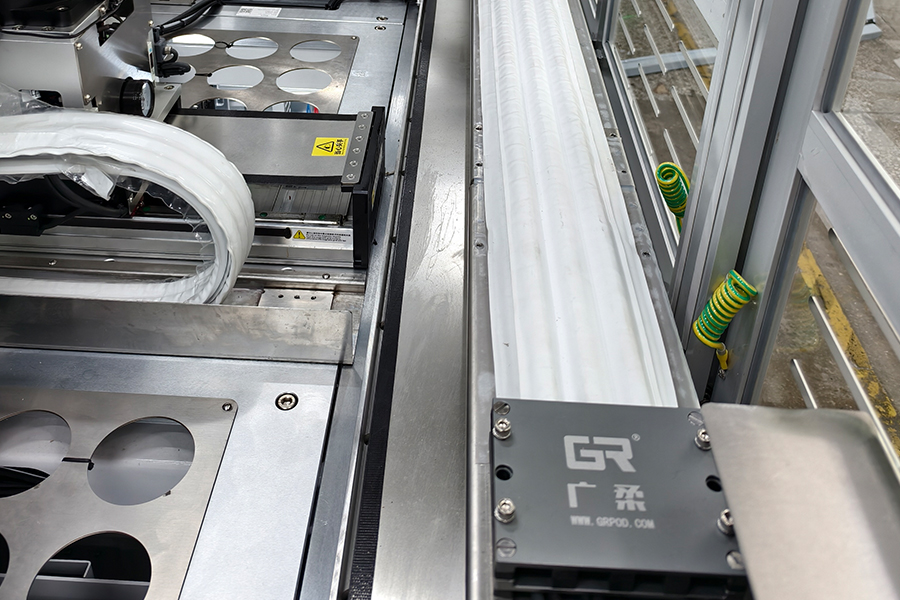
wear develops where chain joints move, cables rub against separators, and surfaces contact during repeated travel. A standard cable chain generally prioritizes mechanical protection and service life. A cleanroom cable chain also needs to limit the particles released as those surfaces wear. Low friction helps, but cable loading, bend radius, and alignment still affect performance.
Guangrou cleanroom cable chains use modified PTFE film technology. Huizhou Zhongke Intelligent Technology Co., Ltd. integrates PTFE film development and production with chain assembly, allowing material properties and assembly details to be addressed together. Any claim that its film outperforms competing materials should be supported by comparable abrasion tests.
Guangrou flat cables require suitable spacing and bending conditions to reduce rubbing. Guangrou open-type cleanroom cable chains provide maintenance access, while closed-type versions can help contain wear debris, depending on their construction. Guangrou Class 100 cleanroom tank chains should be assessed using particle-test results that match the intended operating conditions.
Compare particle release after repeated cycling, not just visible surface damage. A carrier can remain mechanically functional while releasing particles that affect contamination-sensitive processes.
Cleanroom chain uses
A cleanroom cable chain is used on semiconductor handling equipment, display production lines, and precision inspection stages, where particles released during repeated motion can contaminate exposed surfaces. Standard cable chains remain suitable where particle control is less demanding. Battery dry rooms require separate checks for low-humidity compatibility; cleanroom suitability alone does not establish dry-room performance.
Guangrou cleanroom cable carriers and Guangrou flat cables provide options for routing moving cables in compact equipment. Open-type cleanroom cable carriers allow easier maintenance access, while closed-type designs provide greater enclosure of the cable path. Neither construction alone establishes particle performance. Guangrou Class 100 cleanroom tank chains should be assessed against the equipment’s actual cleanliness requirements and documented test conditions.
Huizhou Zhongke Intelligent Technology Co., Ltd. has PTFE film modification capabilities and an integrated process covering film development, production, and cable-carrier assembly. This process supports control over material properties and assembly consistency. Any claim that its PTFE film outperforms most competing materials in wear resistance requires comparable test evidence. Selection should account for particle release, bend radius, travel speed, and service life under representative operating conditions.
Conclusion
A cleanroom cable chain is designed to control particle release during repeated motion, while a standard cable chain generally prioritizes cable support and mechanical protection. Material selection, contact geometry, and cable routing affect wear in both designs. For semiconductor handling and precision inspection equipment, selection should depend on particle measurements under representative loads, speeds, and bend radii.
Guangrou cleanroom cable chains and Guangrou flat cables offer options for contamination-sensitive cable routing. Guangrou open-type cleanroom cable chains provide maintenance access, while Guangrou closed-type cleanroom cable chains offer greater enclosure. Guangrou Class 100 cleanroom tank chains require documented testing that supports the designation under the intended operating conditions.
Huizhou Zhongke Intelligent Technology Co., Ltd. has PTFE film modification capabilities and an integrated process covering film development, production, and carrier assembly. These capabilities support coordinated material and assembly control. Claims that its modified PTFE film offers better wear resistance than most competing materials require comparable test results. Mechanical service life and particle release should be evaluated together; a functioning carrier can still generate contamination.
FAQs
How does a cleanroom cable chain differ from a standard cable chain?
It controls particle release through material selection and contact design. Standard chains generally prioritize cable support and mechanical protection.
Does "dust-free" mean that no particles are generated?
No. Cable rubbing and repeated bending still cause wear. Particle testing should match the intended speed, load, and bend radius.
Why does modified PTFE film matter?
Its low-friction surface can reduce rubbing. Huizhou Zhongke Intelligent Technology Co., Ltd. integrates PTFE film modification, development, and production with carrier assembly for Guangrou cleanroom cable chains. Claims of better wear resistance than most competing films require comparable test results.
Should I choose an open-type or closed-type carrier?
Guangrou open-type cleanroom cable chains allow easier cable access. Guangrou closed-type cleanroom cable chains provide greater enclosure, but neither design alone establishes particle performance.
Can Guangrou flat cables reduce wear?
They can help maintain cable spacing when correctly installed. Suitable bend radii and alignment remain necessary to limit abrasion.
Where are Guangrou Class 100 cleanroom tank chains suitable?
Potential applications include semiconductor handling and precision inspection. Verify the designation against documented particle testing; battery dry-room use also requires low-humidity compatibility checks.
Contact Guangrou for a clean room drag chain solution.